Fragmented landownership holds back action on many climate risks, from wildfires to floods. This article takes wildfire prevention as its main example. It grew from three European Commission stories shared by Agri-Press in November 2026, and it looks ahead to how the next EU funds could help unblock the problem. Its lessons may help readers beyond the EU too, wherever land is split among many owners.
The full article, with all 23 sources, is free to download and share.
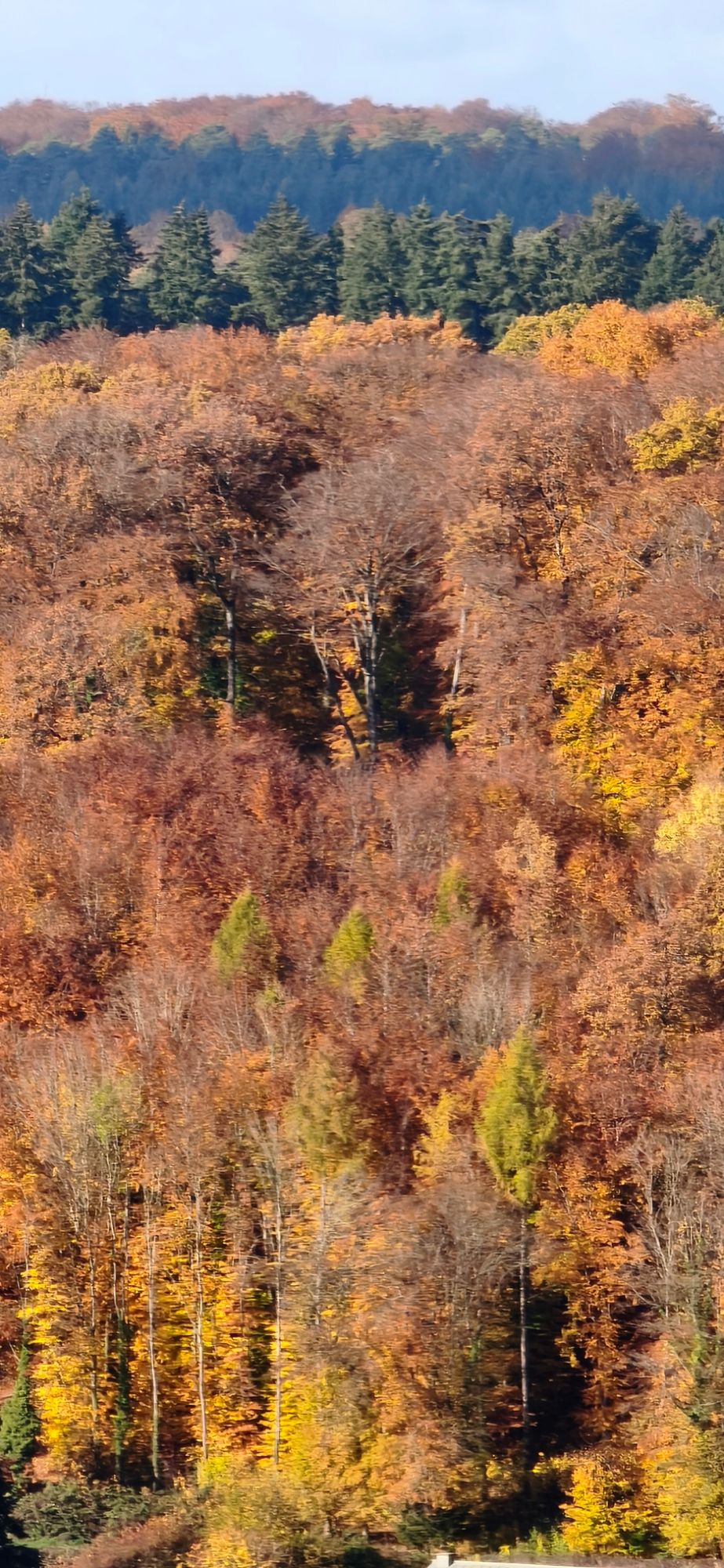
Autumn colours are one of the pleasures of Europe's forests. Yet fallen leaves, dry grass and other vegetation can provide fuel for fires next spring, before new growth appears.
Three recent European Commission articles caught my attention here on Agri-Press this week. One reported the JRC's findings on Europe's record 2025 wildfire season. The others described practical wildfire prevention in Portugal and France.
They reminded me of a friend from Greece who made me understand how frightening and dangerous it can be to be caught in a wildfire, as well as the extensive damage I've witnessed while filming the aftermath of rural fires affecting inland Spain.
With more than one million hectares burnt in the EU in 2025, there is good reason to learn from the prevention work already taking place.
One particularly useful lesson from these Commission articles concerns landownership.
Where ownership is fragmented into many small parcels, organising prevention for a whole landscape can take considerable time.
The challenge grows when ownership records are incomplete or the people responsible for parcels cannot be identified. Yet fire does not stop at property boundaries, so prevention has to cross them too.
Making cooperation easier
Cooperation is an established area of expertise within the EU CAP Network, whose Good Practice database offers useful examples of what can be achieved. In Neuzelle, Germany, a foundation managing around 9 100 hectares established approximately 30 km of CAP-funded natural fire barriers in two years.
In France's Sud-Charente, three municipalities needed around five years to develop 1.7 km of forest road. Landownership, administrative procedures and agreements over maintenance were among the challenges.
Portugal's forest intervention zones and France's forest-owner associations, such as those described in the Agri-Press story from Nouvelle-Aquitaine, provide useful experience in coordinating work on fragmented properties. Around Coimbra, the Horizon Europe-funded RESIST project is helping villages connect and work with landowners to manage vegetation, including introducing more fire-resilient species.
These approaches offer opportunities for wider application, particularly where individual owners lack the resources or practical means to manage their land. Repeated over thousands of holdings, fragmentation becomes a major bottleneck. It is common, and it can block vital work such as fire protection.
What happens when nobody knows who owns the land?
The OECD's 2023 report Taming wildfires in the context of climate change: The case of Portugal found that more than 20% of Portugal's forest land had no known owner, and only 46% was in a land registry.
A missing ownership record can delay a useful intervention, even when neighbouring owners and local authorities are ready to cooperate. In Luxembourg, the cross-border Regiowood project traced 110 such owners more than a decade ago, and LEADER then trained 77 of them to manage their plots.
The OECD describes Portuguese arrangements allowing public authorities to undertake fuel management in certain circumstances where ownership is unknown, subject to national law and appropriate safeguards.
There is also valuable experience from the UN Food and Agriculture Organization. Its guidance on responsible land tenure and work on modernising land administration offer ways to improve land information, identify legitimate rights and resolve uncertainty while protecting owners' interests.
Better land records, local knowledge and appropriate legal arrangements can help establish who decides what happens on each plot, before prevention work such as firebreaks can start.
Making better use of what we know
More than a decade ago, while working on an EU LIFE film about encouraging farmers to join agri-environment schemes, I became interested in what behavioural science could add to public policy.
Understanding people's motivations and practical concerns can help encourage voluntary participation. Research into collective incentives for neighbouring farmers offers another useful avenue.
European wildfire research is also producing valuable knowledge. The EU-funded FIRE-RES, SILVANUS and TREEADS have explored integrated wildfire management, landscape planning and community engagement.
The LIFE film and Regiowood show these challenges have been known for over a decade. Revisiting such projects now could test their durability and show what the people involved would do differently if they could start again. Their hindsight could save time for everyone planning for the next round of funding.
Preparing now for the next EU funding period
We don't yet know the names of the next EU funds, but we know they will come. Their anticipated objectives can already influence planning, cooperation and the use of existing resources.
For the next generation of CAP, ERDF and international environmental programmes, this could mean earlier support for identifying landowners, facilitating agreements and resolving ownership uncertainties. These activities can be planned and funded as part of prevention projects.
New defence and security funding could offer further scope for fire protection. Fire risks can be particularly acute in border areas next to war zones, where shelling and restricted access can start fires and slow the response. In 2025, Ukraine accounted for almost 30% of all burnt area mapped by the European Forest Fire Information System, more than any other country. In 2024, the JRC found fires there followed the war front.
Such opportunities extend to many policy areas, from fire protection, biodiversity recovery and water management to flood prevention, where interventions often need coordinated action across property boundaries.
Learning from the Ebro Delta
The Ebro Delta in Spain offers another useful perspective on climate risks and small land-plot mosaics. Providing more than 90% of Catalonia's rice, this interconnected agricultural, environmental and water-management system makes cooperation between different interests particularly important.
A 2021 Reuters report described local concern about a public proposal to purchase 832 hectares of private land for coastal protection. It illustrates how decisions about climate adaptation can directly affect landowners, livelihoods and community interests.
The delta is also the kind of place where a proposed territorial digital twin could bring together local knowledge, environmental evidence and institutional responsibilities to help communities and policymakers explore alternative decisions. Digital twinning is a technological possibility that could also help manage wildfire risks driven by climate change. Its scenario modelling could identify where fragmented landownership complicates coordinated action and where cooperation should deliver wider benefits.
These shared benefits suggest opportunities for authorities responsible for forestry, water, biodiversity and rural development to plan and invest together. Better assessment of the wider benefits, including avoided wildfire and flood damage, healthier ecosystems and stronger rural communities, could reveal considerably more public value than individual project budgets show. Making these benefits visible could strengthen the case for shared investment and help people appreciate the full value of public action.
Showing that value would help authorities justify shared investment and demonstrate to taxpayers what their money achieves. This is the thinking behind public policy, better valued, where the benefits of public action are counted more fully and appreciated more widely.
The examples shared by Agri-Press, the JRC and the EU CAP Network show how much useful experience Europe already has to draw upon. There seem to be many opportunities to
- Connect these lessons
- Explore where fragmentation still delays action
- Make the wider public benefits of cooperation more visible for fire and flood protection
Sharing more examples of how communities overcome these obstacles could help others prepare better investments in wildfire prevention, flood resilience and climate-smart land management.
Across Europe, fragmented landownership is a bottleneck for preventing climate risks. Planning now for the next EU funds can help unblock it.
References and further reading
European Commission articles that prompted the story
- European Commission, Joint Research Centre (17/11/2026). 2025 fire season: official data from 35 countries show how the record season unfolded
- European Commission, DG AGRI. Fire-smart villages: how Coimbra is reshaping its landscape
- European Commission, DG AGRI. Built before the fire: wildfire prevention in Nouvelle-Aquitaine
Practical European experience
- EU CAP Network. New water wells and nature-based forest fire barriers
- Geographies (2026), University of the Algarve study. Beyond cadaster: landowners and land fragmentation, insights from a case study (Alferce, Portugal)
- ENRD (2012). Luxembourg LEADER projects expand outcomes of cross-border forest action
Landownership, governance and international research
- OECD (2023). Taming wildfires in the context of climate change: The case of Portugal
- FAO. Modernizing land administration
- FAO (2012). Voluntary Guidelines on the Responsible Governance of Tenure of Land, Fisheries and Forests
Behavioural science and EU-funded innovation
- University of St Andrews. Nudging farmers to enrol land into agri-environmental schemes
- EU LIFE programme (2013). Encouraging agri-environment absorption (film)
- European Commission, Research and Innovation. A shared vision for shaping the future of wildfire risk in Europe
International applications and related policy thinking
- Global Environment Facility. Community-based Wildfire Risk Management in Lebanon's Vulnerable Landscapes
- GEF Independent Evaluation Office (2022). GEF Support to Sustainable Forest Management
- Tim Hudson Consultancy. Public policy, better valued
- Tim Hudson Consultancy (2026). Four questions that could help public investment deliver more
- Tim Hudson Consultancy (2026). Better Cohesion, Better Impact, Better Europe (PDF)
Seasonal wildfire risk
- Waldwissen.net. Waldbrände in Deutschland (forest fires in Germany)
- International Journal of Wildland Fire (2024). Vegetation phenology as a key driver for fire occurrence in the UK and comparable humid temperate regions
Ebro Delta, land management and climate adaptation
- Reuters, via Al Jazeera (31/10/2021). Spain's land buyout plan in shrinking Ebro Delta irks locals
- Tim Hudson Consultancy (2026). Imagine establishing a digital twin equivalent of a Ministry of Food: from Spain's Ebro Delta to Europe's future food governance
Fire risks in war zones
- European Commission, Joint Research Centre (31/03/2026). 2025 was EU's most destructive wildfire season on record
- European Commission, Joint Research Centre (25/03/2025). Ukraine hit by record-breaking wildfires in 2024